
Understanding Enneagram Type Four – The Romantic: From the Depths of Envy to the Freedom of Equanimity
If you often feel a profound sense of longing, experience life with intense emotional depth, and suspect that everyone else has a secret manual for happiness that you somehow missed out on, you might be an Enneagram type Four, also known as the Romantic, or the Individualist.
At their best, Fours are our greatest mystics, artists, and empathetic listeners—able to sit in the darkest emotional spaces without flinching. But this capacity for depth comes with a heavy burden.
Explore the internal landscape of the Type Four, the painful trap of envy, and the profound journey toward true equanimity in this in-depth conversation with iAwake’s CEO John Dupuy and Enneagram teacher Leslie Hershberger, creator of Enneagram Meditations.
Core Strategy: Attention on What is Missing
The fundamental driver for the Enneagram Four is a hyper-focus on what is absent. As Leslie Hershberger explains, the Four’s attention naturally gravitates to: What is missing? There’s this one piece missing!
Focusing on what is missing creates a pervasive sense of longing. While other types might brush off a minor disappointment, a Four experiences it as proof of a fundamental flaw—either in themselves or in the world. They are the tragic romantic poets of the Enneagram, constantly searching for completeness, and often finding unity through deep, sometimes painful, inner work.

The Passion of Envy and the Loss of Equanimity
The emotional passion (or vice) of the type Four is envy. This isn’t necessarily the superficial envy of wanting someone else’s car or job. It is a deep, existential envy: You have it… [wholeness, happiness, connection], and I don’t.
The childhood wound of the Four involves losing sight of equanimity—the belief that all just is as it is, and that this “is-ness” is perfectly fine. Because they feel they are missing a crucial piece, Fours often adopt an identity of terminal specialness. If they cannot be normally happy like everyone else, they will at least be uniquely profound. They are the ones who can handle the richness of life, and others are seen as possibly a bit pedestrian.
The Danger of the Deep End: Addiction and the Black Hole
Fours are incredibly gifted therapists and friends, because they can reach as deep as you want to get. However, this strength is also their greatest vulnerability. Fours can get lost in their interiors… they get lost inside and find themselves in a black hole.
When a Four relies too heavily on exploring their internal emotional landscape, it can turn toxic. In the realm of addiction, Fours often use substances not just to numb, but to fill up that sense of lack or to dramatically express their suffering. Their acting out can be extravagant and aggressive, driven by the intense pain of feeling fundamentally inadequate.
The Growth Path: Action versus Over-Helping
A fascinating insight in the interview comes from an audience member (a self-identified type Four) discussing the Enneagram arrows (lines of integration/disintegration).
When a Four is stressed or acting dysfunctionally, they often move toward the low side of type Two (the Helper). They might become “cloyingly helpful,” trying to find their missing wholeness by merging with or over-serving someone else. This usually backfires, pushing people away because the energy feels needy rather than genuinely supportive.
Conversely, the path to health (integration) for a Four involves moving toward the high side of type One (the Reformer). The Four needs to find something outside of themselves that is noble and good to concentrate their efforts and life energies on. This helps them reorganize internally.
When a Four stops staring into their own emotional black hole and channels their visionary energy into purposeful, structured action in the real world (like the audience member working on projects involving democracy), their profound gifts become a wellspring of depth and beauty to share with the world.
Enneagram Meditations for the Four: The Practice of Gratitude
For many types, the advice is to “go within.” But for the Four, who already lives in the deep end, the medicine is often the opposite: Medicine for the Four may not be to go into the deep, dark depths, but just go with simple gratitude.
Meditations for Enneagram type Four should focus on anchoring them in the present moment and cultivating an appreciation for what is already here, rather than what is missing. The simple act of noticing the beauty in a crack in the sidewalk can be a profound spiritual practice, shifting them from envy to equanimity.
Ready to Step Out of Longing and Into the Present?
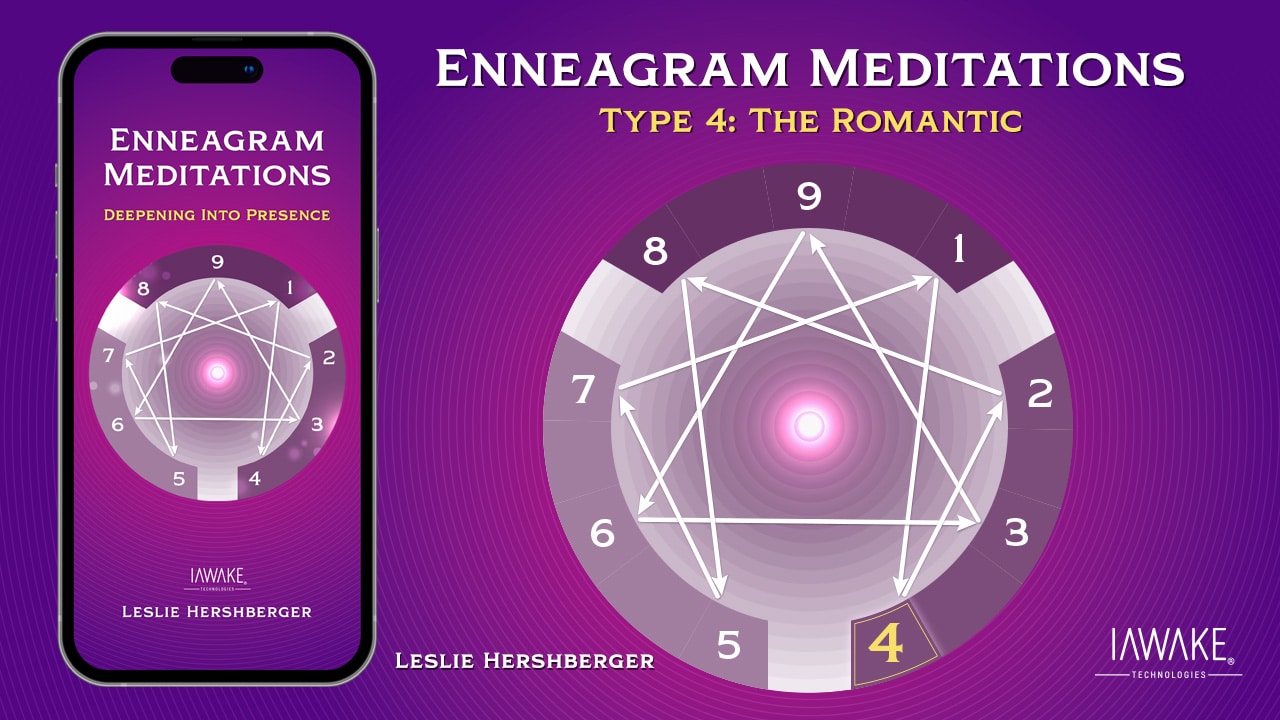
If you are a type Four, you possess a rare and beautiful depth. But you don’t have to live in the pain of feeling that something is fundamentally missing. You don’t have to be defined by your suffering to be unique.
The journey from the stormy waters of envy to the calm shores of equanimity is possible. We have developed specialized tools designed to help you balance your rich inner world with grounded presence.
Transform your inner world with our Enneagram Meditations.
These tracks are specifically engineered to help you:
- Cultivate equanimity: Shift your focus from what is lacking to the profound beauty of what is already here.
- Ground your emotions: Find a stable internal center when the waves of feelings threaten to become a black hole.
- Inspire purposeful action: Access the integrating energy of type One to channel your vision into meaningful engagement with the world.
Stop searching for the missing piece out there—discover that you are already whole. Experience the power of targeted meditations for Enneagram type Four and start your journey toward balance today.
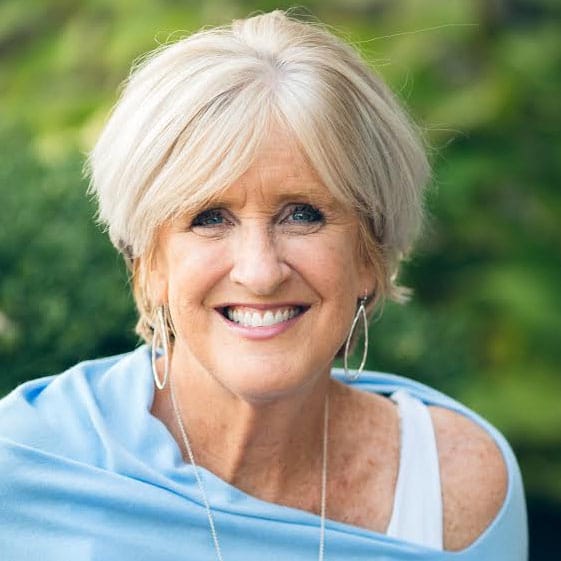
Teacher, theologian, spiritual guide, and master facilitator, Leslie Hershberger is the founder of The Three-Centered Enneagram, and offers both corporate and contemplative workshops, retreats, and keynotes throughout the U.S. and in Europe. She designed the online course The Foundations of the Enneagram: The Centers Approach, which is both a deep and a practical way of developing embodied emotional and social intelligence. Leslie integrates the Enneagram, three-centered contemplative practice, and Integral Theory in her work.

John Dupuy is a co-founder of iAwake® Technologies, co-host of the Deep Transformation: Self-Society-Spirit podcast, and founder of Integral Recovery®. His book, Integral Recovery: A Revolutionary Approach to the Treatment of Alcoholism and Addiction, won the 2013 USA Best Book Award. John travels internationally to teach and inspire on the subjects of Integral Recovery, Integral Transformative Practice, and the use of brainwave entrainment technology to deepen one’s meditation practice and in the treatment of addiction, depression, and PTSD.

Leave a Comment
You must be logged in to post a comment.
Leave your comments below