
Understanding Enneagram Type Three – The Performer: Moving from Human “Doing” to Human “Being”
Are you driven by goals, focused on success, and highly adaptable to whatever situation you find yourself in? You might be an Enneagram type Three, commonly known as the Performer, or the Achiever. At their best, Threes are inspiring, effective, and integral leaders who genuinely know how to get things done. But behind the polished exterior and the impressive resume lies a profound inner struggle.
This deep dive into the personality of the Three, based on an interview by iAwake’s CEO John Dupuy with Enneagram teacher Leslie Hershberger (who created the type-specific Enneagram Meditations), explores the core mechanics of type Three, the heavy burden of the chameleon, and the challenging but liberating path to true authenticity.
The Heart Center: An Image-Focused Lens
To understand the Enneagram type Three, you first have to understand where they live on the Enneagram map: The Heart Center (along with Types Two and Four).
Heart types are fundamentally concerned with image, relationships, and the search for authentic identity. Their lens of perception is “out there.” They are constantly reading the room to answer the question: How am I being perceived? For the Type Three especially, their attention goes directly to tasks, goals, and efficiency. They project an image of success to secure respect and affirmation, and their underlying, often unconscious proposition is: “I am what I do.“

The Two “F” Words: Failure and Feelings
Because a Three’s identity is entirely wrapped up in their accomplishments, they aggressively avoid two terrifying “F” words: Failure and Feelings.
- Failure: If “I am what I do,” then a failure isn’t just a mistake; it is an annihilation of the self.
- Feelings: Feelings are inefficient. They slow down the forward momentum. Threes can become incredibly impatient with emotions—both their own and others’—because feelings threaten to overwhelm their carefully constructed strategy.
Often, it takes a dramatic external event to stop a type Three’s relentless motion. As noted in the interview, many Threes only begin their inner work when forced to by a physical injury, an illness, or a massive career setback. When the ability to “do” is stripped away, they are finally forced to face the terrifying prospect of simply “being.”
The Chameleon Quality and The Trap of Deceit
One of the most fascinating aspects of the Enneagram 3 is their chameleon-like quality. Success looks different in different rooms, and the Three instinctively knows how to adapt. As the interview beautifully illustrated, a type Three attorney might boast about high-profile clients at a networking event, but when vacationing in a laid-back Caribbean town, effortlessly adopt a chill, backpacker persona, where having less is the metric of success.
The core vice (or passion) of the type Three is deceit—but it is primarily self-deception. They become so skilled at adapting to what the world applauds that they forget who is actually underneath the mask. One Three poignantly asked: “Do you think that anybody is really who they are, or do you think everybody just really goes through life as a chameleon?”
The Flatline: Emptiness, Burnout, and Addiction
When a type Three is actively checking off goals, their strategy feels great. But what happens when the applause stops?
The interview highlights a dangerous shadow side for the Three: inner poverty. Everything on the outside might look perfect—the right job, the right house, the right partner—but inside, there can be a profound vacuousness. When a major project fails or a relationship stalls, Threes can experience a severe flatline, losing all their forward momentum. This emptiness is where addiction often takes root. Drugs or alcohol become a strategy to medicate the void, providing a temporary feeling of peace, bliss, or a break from the exhausting performance.
Enneagram Meditations for the Three: The Ultimate Challenge
For an Enneagram type Three, traditional meditation is agonizing. It requires them to stop doing, stop performing, and sit with their feelings.
“A lot of them will say they need a ball or they need a cat on their lap. They need to be doing something… it’s very challenging to go inside.”
Because God, truth, and value have always been found “out there in the doing,” sitting feels like a waste of time. Yet this is exactly what the Three needs. Enneagram Meditations tailored for the type Three focus on separating their inherent worth from their productivity.
The path to health for the Performer is realizing that they are loved for who they are, not just for what they accomplish.
Ready to Drop the Mask and Find True Rest?
If you are a type Three, you are likely exhausted. You’ve spent your life achieving, adapting, and outrunning the fear of failure. But what if you didn’t have to perform to be loved? What if your worth was guaranteed, even if you never achieved another goal?
The transition from “human doing” to “human being” is the hardest task a Three will ever undertake, but it is also the most rewarding. And you don’t have to do it alone.
Transform your inner world with our Enneagram Meditations

These tracks are specifically engineered to help you:
- Slow down safely: Gentle sonic environments that make sitting still feel less threatening to your nervous system.
- Reconnect with your feelings: Create a safe, private space to process the emotions you usually push aside.
- Discover your authentic Self: Shed the chameleon skin and connect with the profound, quiet truth of who you are beneath the resume.
Stop running and start resting. Discover the power of targeted meditations for your Enneagram type and begin your journey to authentic peace today.
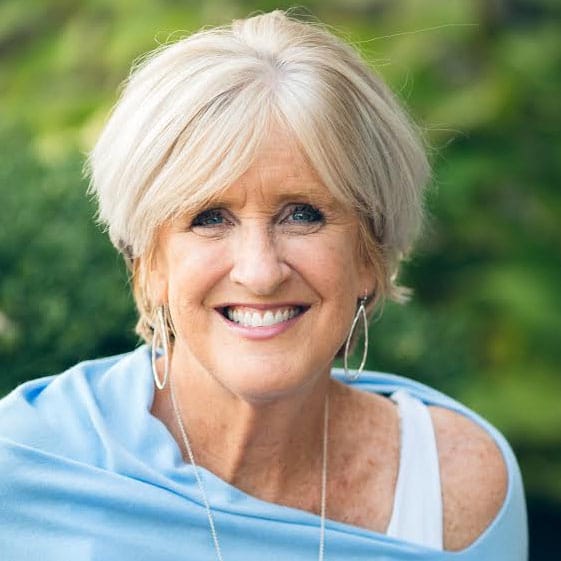
Teacher, theologian, spiritual guide, and master facilitator, Leslie Hershberger is the founder of The Three-Centered Enneagram, and offers both corporate and contemplative workshops, retreats, and keynotes throughout the U.S. and in Europe. She designed the online course The Foundations of the Enneagram: The Centers Approach, which is both a deep and a practical way of developing embodied emotional and social intelligence. Leslie integrates the Enneagram, three-centered contemplative practice, and Integral Theory in her work.

John Dupuy is a co-founder of iAwake® Technologies, co-host of the Deep Transformation: Self-Society-Spirit podcast, and founder of Integral Recovery®. His book, Integral Recovery: A Revolutionary Approach to the Treatment of Alcoholism and Addiction, won the 2013 USA Best Book Award. John travels internationally to teach and inspire on the subjects of Integral Recovery, Integral Transformative Practice, and the use of brainwave entrainment technology to deepen one’s meditation practice and in the treatment of addiction, depression, and PTSD.

Leave a Comment
You must be logged in to post a comment.
Leave your comments below